Showing posts with label Erick. Show all posts

December 3, 2011

The Case of the Microwave Murder


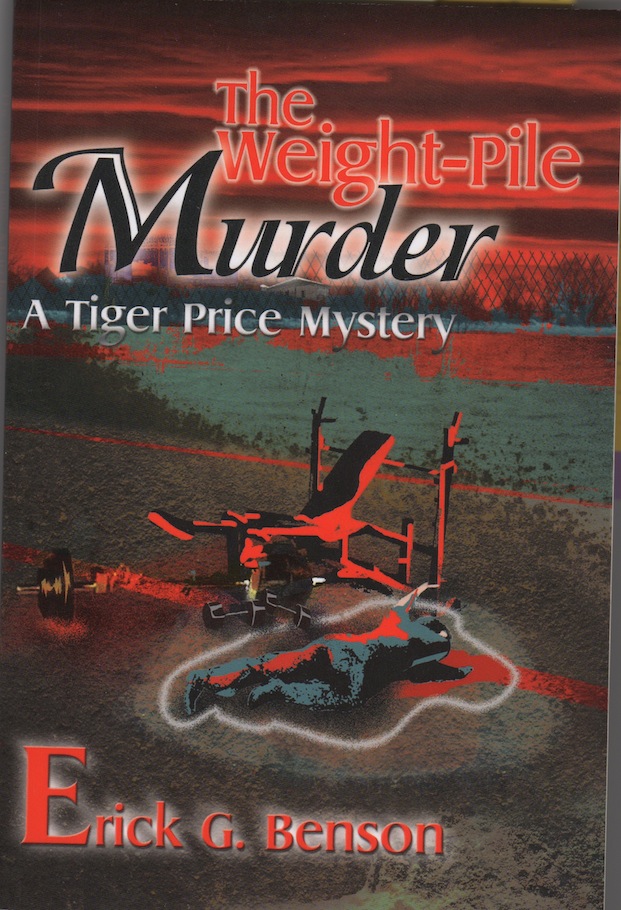
I considered Erick G. Benson’s debut novel, The Weight-Pile Murder, a failure because of flaws in its structure, problems with the prose, and a lack of tension. He has corrected those flaws in the second Tiger Price murder mystery, but I was steal not impressed.

In Framed Justice ( ISBN 978-0-595-43681-1), Tiger Price investigates the murder of a drug dealer for which his best friend’s son is on trial.

Mario Peck, the son of Price’s friend Paul, got into a fight with his neighbor Fred Dixon over a microwave oven in the hotel where he lived. Fred ended up dead after Mario stabbed him in the neck with a small knife. Somebody hit Mario on the hit, causing him to become woozy, so he didn’t know what happened next. Mario was arrested and accused of killing Fred.

Mario, electing to be his own lawyer, is denied access to his file. The Judge also denies several of the many motions he files. He and his father believe the police, the prosecutor, and the judge are conspiring to frame him. Paul hires attorney Larry Deter, but later tries to fire him because he thinks the attorney isn’t working hard enough on the case. The judge denies his request.

When Price asks Deter to hire him as his investigator, Deter refuses because he doesn’t want Price interfering and telling him how to try the case. This doesn’t stop Price from investigating the case on behalf of his best friend. Upon his initial inspection of the crime scene and review of what little evidence there is Price sees sloppy investigative work.

During his investigation, Price finds himself going up against the system and Deter. He gets help from his friend Ethal, the very efficient clerk at the prison where he previously worked, and from an individual named Pilgrim who hangs out in front of his new office. The evidence he gathers is so compelling Deter cannot refuse to present it in court. The identity of the killer is revealed during Deter’s defense not during Price’s investigation.

Benson shows a flair for vivid description as he presents a picture of the dark side of poverty on a tour of the section of the city near the hotel known as the Black Tunnel:
TP was dumbfounded. The scene was like nothing he'd ever seen in his life. There were aluminum cans and broken bottles strewn across the entire street, sort of like nightmare alley. There were rats as big as cats strolling along freely down the sidewalk, almost carefree, as if marking out a territory. Two homeless-looking men were urinating side-by-side in the middle of the street and, more disgusting still, a woman crouched on the curbside of the street, defecating. TP continued to watch, shocked. The woman finished her business, pulled up her pants, and walked over to a man standing nearby. She placed her hand in a large bag of potato chips that he was holding.

His use of the third person point of view and vivid descriptions show Benson is capable of writing readable prose.

I didn’t like the presentation of the details essential to the plot through courtroom scenes instead of straight narrative. The introduction of a supernatural character who is clearly the deus ex-machina, though well done, is, nevertheless, unnecessary.

The religious element at times intrudes and adds nothing to the plot, character, or theme. For me, the main problem with both novels is the character of Tiger Price. He has no flaws and lacks emotional depth. He is too perfect. I admit he is not as annoying in Framed Justice as he is in The Weight-Pile Murder.

Sometimes, it is difficult to tell whether the thoughts expressed about society, the judicial system, and God are those of Tiger Price or his creator.


November 5, 2011

Debut Failure

Erick G. Benson, is a playwright, film and television producer, and former parole agent and correctional officer for 12 years in California, which experience obviously gave him some insight into the prison life he so authentically describes in his debut novel The Weight-Pile Murder. 

I find it difficult to write a negative review of a novel for two reason. First, I want readers to read the novel and form their own opinions. Second, my reason for writing this blog is to persuade readers to read crime novels by African American authors, which means I must include novels I don’t like. Although the central character in The Weight-Pile Murder is interesting, the novel was disappointing.

Newton Black, leader of the Black Confederate Movement Organization, is killed in the weight-pile, the area of the prison yard where the inmates do weight lifting. Investigative Lieutenant Tiger Price, after working in the California Prison system for 30 years, is three weeks away from retirement. Even if it means delaying his retirement, he feels he must solve the Black murder  because, he tells his supervisor, Captain Davenport, “my inner spirit continues to tell me I must complete this mission.”

Price, nicknamed Tiger because his investigative skills are rumored to be “fierce, relentless, energetic, and full of courage as likened to a tiger,” is a 50-year-old widower with two daughters in college. After he retires, he plans to open his own private investigation business. He is very religious, gets down on his knees every night to pray, and he twice asks God for help in solving the case. However, there is no indication that he attends church regularly. For a man who works among all types of criminals, he is an idealist and shows a remarkable lack of cynicism and self-righteousness.

Price’s investigative skills are recognized by his superior and others on the staff, including himself. He has an interrogation method that he proudly describes in too much detail as he formulates questions to ask each inmate on his investigation list. He describes how evaluation of body language is significant. After describing the eyes and hands, he needlessly discusses the tongue.
The tongue is one of the smallest parts of the human body, and more than oftentimes proves to be the most dangerous. The tongue can spew multitudes of filth and can destroy lives in an instance. The tongue can also offer a gentle fragrance of joy. The tongue can cut as well as comfort.

In an interrogation, the tongue may be important because of what is said, but the description rather than showing the importance of the tongue shows how Price can sometimes sound self-righteous.

Benson fails to fulfill a promise he suggests in the opening. Lieutenant Price is sitting in his car in the empty parking lot of a fast food restaurant eating his lunch when he is surrounded by several police officer with drawn guns pointing at him. He manages to identify himself after the supervisor appears. The supervisor explains that the fast food restaurant was robbed 15 minutes ago. Price later checks with the manager of the fast food restaurant and learns the identity of the robber didn’t come close to resembling him. The robber was white and short, he is black and over six feet.

The opening incident promises a motif of racism, causing the reader to expect more confrontations between White and Black inmates or White authorities and Black inmates. No further incidents of possible racism are depicted, thus racism is neither a minor nor a major theme.

In using first person point of view, Benson attempts to match the prose to Price’s personality, making him sound like a bureaucrat and a straight arrow. The result is a lack of separation between dialogue and narrative. Benson has long paragraphs in the middle of which he will insert dialogue, and sometimes the quotation marks at the beginning or end are missing, making it difficult to tell where dialogue ends and narrative begins.

Lieutenant Tiger Price is too good, so good that he is annoying. Even the prisoners like and respect him. He has no faults—was a loving and devoted husband, is now a loving and devoted father, and is exceptionally good at his job. I also was disappointed in the lack of tension, except in the opening scene. At no time is Price or his staff ever in danger from the inmates.

The structure of the novel is awkward, the prose at times clumsy, and the righteous tone irritating.

Benson has written two more Tiger Price novels. Framed Justice I’ll review in my next post. Black White Boy is scheduled for release in the Fall of 2012.